Sunday, 14 February 2016

GARDEN PROJECTS FOR 2016

Solanum mammosum, or 'Nipple Fruit', an ornamental egg plant, is used in China as one of the plant materials used in the creation of New Years Trees, used because of its auspiciousness ( it's gold color, good for prosperity in the coming year)
Image from Bluebalu - Living in Hong Kong.

Here is a long list of some Garden Projects I am currently exporing as potential candidate for my 2014 growing season. So many of you responded with nice things to say about these prokjects, many of you mentioning that it was your favorite part of my blog, that I want to amp up my explorations. These step-by-step projects are fun to do, yet they require some prep work, so I am sharing this unedited list first to get some responses, and other ideas if you have them.

Note: In the past, here are some other projects I attempted ( projects are in-depth challenges where I may grow as many selections of varieties of a plant, or start a collection, or try something to grow that few of us ever seem to try in our gardens, in an attempt to inspire others).

In the past, I've shared these:

OCA - Oxalis tuberosa 

I've been more than a little curious about primitive varieties of veggies ( which is why I experimented  with Green Oxacan Corn last year). Today, many are proposing that heirloom and 'lost crops' are worth growing for either nutrition or flavor, so as seed catalogs start to promote more of these heirloom varieties of potatoes and other root crops, I could say I am concerned about healthy alternatives to big, baked potatoes but let's be realistic - I only have nine raised beds, and there is no way that I am going to live off of my garden. OK, honestly, the real reason I want to try this particular crop is because it is a tuberous oxalis and if you have ever visited me, you would know that I am a collector of tuberous oxalis.

 You may have seen Oca in specialty markets ( often at some Whole Foods in the fall in the US), yet in its native country of Peru, the Oca tuber is a staple food product, and in many South American countries, it comes second only to  potatoes.  I am following many of the techniques and advice outlined a blog I found on growing Oca called: Growing Oca by Ian Pearson. You may wish to check out this post too on Oca Testbed, for some sneak peeks on what this crop could look like. I am still gathering information from these sites, but don't worry, I won't be watering mine with diluted urine as he did.  Oca plants are available from Territorial Seed but I am on the look out for other sources of tubers - I would appreciate and sources you may find as I would like to grow a wide variety of selections.


Fermentation Projects -  Kombucha to Kimchi

There is this idea 'fermenting' in my head - call it a 'gut response' (sorry). Pickling with natural fermentation is something that my parents did when I was growing up in the 60's and 70's, something I considered so normal that I thought everyone did it, maybe because many of our neighbors also fermented veggies. This neighborhood that I still live in was once composed primarily of Eastern European immigrants, from Poland, Lithuania and Russia, and pickling was a common as cabbage. I found my grandfathers sauerkraut directions typed on some cards upstairs, and he died at 99 years old back in 1986, apparently while trout fishing ( well, he DID take up smoking at age 90).

Naturally fermented foods and my home here have many connections, and it's time to explore this in depth, which should be easy since we still have all the crocks in the cellar, stored in the 'store room' with the old cork door on it. To be honest, I thought all pickles were vinegar pickles, since I only helped my parents slice cucumbers and onions or shred cabbage rarely paying attention to the details later on in the process.

To be honest, this natural pickle project is a response to recent writings and talks that I have heard about gut flora and microbiota cultures inside of us, all thanks to author Michael Pollan; and this landmark article published in the New York Times earlier this year. This article has him still making appearances on NPR and heath programs, speaking about gut biomes and bacteria communities, and how essential they really are for good human health. He also promotes  the Human Micro Biome Project, and the Human Food Project, (visit their site) and their American Gut project - which is attempting to sequence the gut communities of thousands of Americans. Another related topic I may cover as elegantly as I can.
I admit that I am heavily swayed by this particular selection called 'Chatter's Doubles" available from the German seed company, Jelitto. Swoon worthy Hollyhocks in chestnut, chamois, peach and cinnamon. 

A  Hollyhock Project 

Join me as I rediscover the joy of old fashioned Hollyhocks on this two year journey, which may include a few other biennials like Foxgloves and campanula, not always the easiest to raise from seed. We rarely see the stately Hollyhock anymore. So I think it's time that we rediscover this fine, tall biennial - a classic in New England cottage gardens, old English cottages, fairy tale cottages and in the front gardens in those paintings of candle-lit cottages by Thomas Kincaid  . I am often asked about cottage gardens, and since biennials are key components of the more iconic cottage garden scheme, I think I should start with more projects involving the culture of true biennials, as I know that they are challenging for many people to master, so this might be a good step-by-step topic to cover.

Biennials are rarely seen today because of a very simple fact - in order to grow them well, they must be planted (sown) during the previous year, then wintered over and then allowed to grow to blooming size in their second growing season.  If one is lucky, they will set seed, and resow where they really want to grow. It is because of this very habit, that we rarely find them available at garden centers. You may find plants in-bud, and one may assume that some well intended nurseryman did all of the hard work for you, but these pot grown specimens are always a shadow of what they could have been.

This also could change, since I really was excited about hollyhocks two weeks ago when I began this post, but now, in mid-February......meh. I still need to find one flower where I can grow ALL of the selections available, and for some reason, I keep going back to old fashioned nasturtiums. So common, and yet, when do we ever see all of them arranged side-by-side in a comparison study?


A collection of Lithops grown by Tony Phan

A Lithops Collection

I have a friend who boasts about having the world's second largest collection of conophytum. I also have a friend who boasts about having a serious collection of most every species of Haworthia. The same goes for a collection of Dykia that I know.  These collections are amazing when arranged together for viewing, and I have been envious everytime I see them in local Cactus and Succulent Society shows. There is something about seeing a collection of like species or species within a genus arranged side by side, so that one can study and appreciate the nuances between them all.

I am seriously thinking about starting a collection of lithops, and Conophytum species ( all grouped as living stones), which will need to be sown by seed so that I can collect most of the species available, but a few can be purchased.  I plan on collecting as many of the Living Stones, or Lithops (and related genus/species) starting with 2014. I imagine this collection as more of a botanic collection than an ornamental one, displaying the seed raised containers in tidy rows, with lables showing proper identification. I have at least 65 named selections ordered, and I may order some prestarted species to fill in gaps. I feel the urge to add another serious collection to the greenhouse.

Dahlia Trials part 2

Yes, I plan to try dahlias again this year, as it has been 5 years since I last attempted a trial of dahlias. In that year, the results were spectacular, as I composed a palette of violet, purple, magenta and lavender dahlias.This year I think I am ready to try more, but I just need to find the right place to grow them as they require sun, high fertilizer and lots of water.  I was planning on growing another trial of Chrysanthemums ( the exhibition type) but one of the country's only sources Kings Mums, has had a tragic and catastrophic disaster, with plant losses causing them to shut down for one year. So Dahlias ( or tuberous begonias?) it is.

The High Alpine Rock Garden Project - Crevice to Scree

I have a few rock garden projects planned for this year. First, I will be continuing our crevice garden planting near the main entrance to the studio, a project I started five years ago when we had a few influential rock garden enthusiasts stay with us while touring the country on speaking tours ( Josef Halda among them). It's time to continue with my long term planting scheme, and add another 200 sq feet of rock, placed vertically, end upon end, in this newly introduced (from the Czech Republic) style for creating a rock/alpine garden. Halda shared some secrets with us which I would like to share, and with my growing passion for alpine and high elevation plants, I feel the need to build more rock gardens around the  property once again.

A formal garden planting - maybe culinary herbs 

I admit that have been thinking about designing a formal culinary herb garden,  perhaps planted behind the house where our golf putting green used to be ( I know- so snooty - a"golf green". right? But yes, there was a bent grass putting green in our garden for at least 70 years - a long story for another post).  I have allowed the lawn to grow out, and I am still deciding what to plant there. Maybe a boxwood parterre, maybe a formal peony garden, or even a Fletcher Steele inspired garden ( see below). Or a rock garden. I need to address this issue soon, so here I go with some ideas.

I do grow many herbs, but they are placed throughout the garden, in spare spaces in the perennial borders, along walks or planted en mass in the vegetable gardens, usually in rows, which is the most practical way to grow herbs, as I can feel free to harvest large bunches as needed. In veg garden, I have both annual and perennial herbs: annual seeded herbs such as 3 of 4 dill varieties ( some grown for seed heads for flavoring pickling spices, and other as fresh green dill for salads, egg dishes and most everything else one needs dill added to. I also grow a wide selection of Basils, summer savory for summer squash dishes and sages, but I always wanted a culinary, or even a more traditional New England style cottage herb garden - the sort one would have seen in the 17th century, with a selection of essential kitchen herbs as well as medicinal herbs.


A Fletcher Steel Inspired Border
This summer I will be presenting a couple of talks about my experiences as a gardener at a Fletcher Steele garden ( the Stoddard Garden) once again. I've been surprised by the interest in this subject, and I am just beginning to realize or appreciate the gift that experience gave me back in the late 1970's and early 1980's when in college. I remember so much, exactly what was planted in each border, the exacting detail required for proper maintenance of everything from a planted tufa rock wall with a large collection of encrusted silver saxifrages, to how to maintain a collection of gentians. I really want to recreate a few of the perennial plantings that I remember so well, and I think that this may be the year, as even scholars who study this most well known of American landscape architects, have lost many of his planting schemes, those very schemes which exist in my brain. I think it's time that I exercise some of that knowledge.

Another Fletcher Steele idea which I have been eager to visualize is a shrub border composed of primarily golden leaved shrubs. That may be more realistic.


Pansies on display at the Chelsea Flower Show, where growers showcase a display of as many varieties as possible in massive, tiered displays. I am still thinking of what I could grow this year - ideas are welcome. Zinnia? Nasturtium? Marigold? Gladiolus? Tuberous Begonia's again?

A Floral Audit  Collection like Chelsea
OK, in the past, I grew every variety of sweet peas that I could find, I covered how to grow annula poppies growing all of the Shirley poppy varieties available, or Japanese Chrysanthemums - and then documenting the process with images. I admit that I am influenced by the displays in the growers tents at the Chelsea Flower Show, were one can view a selection of  varieties, side-by-side, but I am not sure yet what flower I will grow this year.  I am open to ideas. I've been playing around with more common annuals, like nasturtiums or marigolds, as we rarely see these all grown together, and displayed in ways that would make us want to grow them in our own gardens.

Please share thoughts on what I might grow as my Chelsea Floral Audit this year.

Greenhouse Cucumbers and Tomatoes
Another project that I have been wanting to do for a while.  A few years ago, I grew heirloom and gourmet melons in the greenhouse, when I realized that all of that space was going to waste during the summer. This year, I am exploring growing English and Asian cucumbers, and a few tomatoes ( even a crop of Chinese Yard Long Beans, all possible crops for a summer greenhouse.

Tuberoses
I failed in growing a crop of tuberoses last year ( inspired by a few of my 18th and 19th century books), but I am learning, and will try again. So my Tuberose project continues once again.Especially as some breeders have introduced colored selections of tuberoses.

A Cutting Garden of Woody Plants
Another project that I keep pushing out, but maybe this is the year. I imagine a cutting garden for shrubs and small trees. Each winter and spring, I want to cut many branches to force. quince, plum, forsythia and other force-frendly shrubs so that I will not damage specimens near the house. It makes sense to plant such a luxury, as indeed, it is a luxury, but I have the space and the means, so why not? I also would like to plant lilacs, as they are horrible garden specimens, as maybe a few rows of cut flower perennials like peonies and roses. A serious, long term cutting garden, planted way out back where my mother had her cutting garden of peonies and poppies in the 1950's and 1960's.


Auspicous Asian Plants

I continue to be curious about the many traditional, and very ancient flower festivals and celebratory elements about plants in much of Asia, in particular, China and Japan. In China, for instance, plants are used which they believe have auspicious meaning to them, often due to their gold color or associated value, and how that may contribute to good luck and prosperity throughout the coming year. Take for example the plant we now are starting to see sold as a rare heirloom eggplant here in the states often called 'Nipple Fruit'. In China Solanum mammosum is used to create New Years trees ( more typically created with oranges). 
Then there is the Ground Cherry or Japanese Lantern plant, a weed in many of our gardens, as rampant as many species of Lysimachia, in Japan, its used in a festival called Hozuki ichi, the Ground Cherry Festival held in July. Whenever I am in Asia, I discover something new. The Aoi Matsuri or Japanese Hollyhock Festival in Kyoto is a good example. One may think that this festival is another floral one, similar to the Umi Plum Festival or the Cherry Blossom Festival we are all familiar with, but in reality, it only celebrates the leaves of the Hollyhock, as they are believed to ward off natural disasters. So interesting.


Hops

I thought about growing hops and then making my own beer, but I think I will hold off on this project until next year. I may give in, if I can figure out where to grow them, but then I should grow barley too, right?

Also on my radar.... Fuchsia? Geraniums/Pelargoniums? Streptocarpus? Gloxinia? True Lilies, Trillium, a traditional English Cottage Garden, Heirloom Winter Squash, Sunflowers... Ugh, I need to stop.

Oh, and thanks guys for telling me that my side bar links are all screwed up! Now, at least, I have something to work on at night next week while babysitting my dad while Joe is in NYC at Westminster where our Irish Terrier is competing ( I know, I feel like an Olympic parent at home).

Friday, 12 February 2016

Revisiting, Revising and Editing Those Lists

I need to audit my tomato collection. It's time to balance our how many heirlooms to grow, and how many hybrids. Am I the only one who thinks that the heirloom tomato is over-rated a bit? Just a tiny bit?


While there is still plenty of snow on the ground (at least here in the North Eastern US), I am taking some time to look through the many 'To-Do' lists, and 'Must Get' lists which I have made over the past year, as well as taking some time on a cold Saturday night to look through photos in iPhoto - I find this a great way to revisit plants that I want to order, or remind me about plants I want to remove or edit-out to the garden, and sometimes a better way to remind me about some plants not to continue growing at all.  Here is what I found.

Click below for more:


1. Audit That Heirloom Tomato list

I think that I really need to revisit my heirloom tomato variety list, as many are oh-so-pretty, but either tasteless ( yeah, some are….sorry), too small or just not productive enough. Don't get me wrong, I love their looks, all colorful and yummy looking, and indeed - many do have sensational flavor compared to some hybrids, but many have their faults.  I've found that I cant' depend on a garden populated by mere heirlooms alone. I need some good, healthy normal tomatoes too. Ones that I can put-up and can, some that I can process into sauce and salsa, and then plenty to eat fresh. So, it's time for a blend of both choice heirlooms and super strong hybrids.

This white flowered abutilon, or flowering maple  is still young, being trained as a standard, but there are plenty of plants that can still be added to my container collation for summer color.

 2. Revisit Summer Tubs and Specimen Plants

I think that you can tell from the many photos on my site, that I keep large pots of specimen plants everywhere, but often the case is, not all plants are deemed worthy enough for the title 'specimen' plant. Some, under-perform, and need either a development opportunity, or need to be terminated. More so, I feel that new blood is often in order, and each year I add new pots to the collection - - younger, more vigorous plants, mew varieties, hard-to-find species, or some that will grow into beautiful, old specimen plants ( sub tropical trees, South African bulbs,  tropical shrubs, the plant could fall into most any category), the only rule is that they must raise the bar on what I am growing right now.

Yesterday I spent most of the day dividing Agapanthus in the greenhouse ( I know, it's absolutely the wrong time of year to do this, but it's about the only time that worked for me - I may forfeit blooms in this coming year, but waiting another year until July didn't make much sense either.). I will admit that I am somewhat bored with the manyAgapanthus I have, yet when they bloom, they do add necessary color to the landscape in mid-July through mid-August, and as I am fortunate to be able to winter them over in a greenhouse, it is more than a luxury few in New England have, so I really shouldn't complain.


Agapanthus make spectacular tubbed plants for norrtern gardeners, but they quickly can become root bound, and then, bloom poorly. 

Then there are the wish list plants that I want to add ( like those acacia tree seeds I planted this week for example - obviously a longer-term plan for the greenhouse just in case I win the lottery.). This week, I've  also ordered a large collection of rosemary varieties ( at least 12), as I am curious to see the differences between them all, and the best way to do this, is to grow every one together, in sort-of what the British  gardeners call a 'trial', where they grow every named variety together in one garden, so that one can evaluate them effectively.

Even when not in bloom, Agapanthus in tubs provide texture which is also mobile in the garden.

On that note. I'm also considered more trials this year ( I won't do them all, but my trial list does keep evolving). How about adding a collection of potted exhibition Fuchsia's ( the upright forms), or scented geraniums ( pelargonium selections), but I still haven't made my mind up yet. They are all potted collections, and I do have the space and means, but perhaps not the time for them all. Ugh, Oh Martha, if I had your time, money and farm, what I could do! I would quite the MSLO and focus on what passions - if only, but bills need to be paid, and life can be a time-suck, and I have to admit, I'm not doing all that bad when it comes to doing what I love, I know I am fortunate as it is, even though I can only work in the garden a few hours each weekend.

This photo of a very dark-eyed daylily that I took at a local flower show, reminded me that I need to order it. This one is called 'Gillian', and it is only $12 at Champion Daylilies. Forget about Stella!

3. Order varieties of Daylilies and Siberian Iris that I saw this summer in other gardens and shows.

Color photos on websites and in catalogs are fine, but sometimes seeing a plant in person makes all the difference in the world. It happens to me all the time -- I see plants in other peoples garden or in private collections, and especially at botanical gardens and plant society flower shows, and I take note, usually with my camera, as i have it handy all the time, or I write it down. I try to take a photo of the name tag too, which helps me later ( like…in the middle of winter) when I am placing orders.

Last summer I spotted some must-have day lilies at the Massachsetts Daylily Society show, the some down facing lilies at the Lily Society show, and many Iris at the garden of Iris breeders Jan Sacks and Marty Schafer ( oh, there were SO many there that I wanted!).  Pop over to their site now to see what I mean at Joe Pye Weed's Garden. This is the ideal time to order may of these plants, I would have forgotten which ones I wanted if I didn't document them somehow (iPhoto).


For some ideas for great new Daylilies, check out the website for the American Hemerocallis Society. Join the society and get a great four color journal too with lots of ideas ( hey, it's the same journal plant buyers from the big Dutch growers look through, to see what varieties they want to micropropigate, field test and introduce ten years from now with a fancier brand name attached, but you can get ahead of the curve, by ordering a plant that you  like directly from the breeder. Often it is cheeper, and you can get plants that will never make it to market. Like a four foot tall pink daylily that branches, that could be over-looked by a buyer because it's too tall while in bud for nursery truck shelves.

A visit to a Daylily farm, especially if it is run by a daylily breeder, is one of the best placed to make selections for next years' garden.

Most of these varieties will take years before they reach the local garden center, as they will need to pass many tests that retail plants must face if they are ever to be carried in the mass market. More often than not, we, the gardener miss out on some of the finest plant material, simply because they are too tall ( I love tall), or they don't drop their blossoms, or they won't bloom while in a nursery container. I refuse to let that all stop me from owning a plant.


There are so many Siberian Iris varieties that I want to order from Jan and Marty, after my visit there this past summer, that I will need to spend sometime on their site now making a long list. These must be ordered now for spring planting, and believe me, you are NOT going to find colors like these, let along any Siberian Iris introduced in the past 20 years at a garden center. 
Jan Sacks and Marty Schafer took me through their breeding fields last summer, asking me questions like " what mustard color yellow Siberian Iris stands out to you?" I would say, "oh, this one is so incredible", and they would say, "Really? You don't think that it is too tall? How about one with a larger brown eye?" "Or one with more olive tones in it?"  Really - when there were SO many to choose from, it's difficult to make a decision. The only place to get all of these variations is directly from a plant breeder, as they may only grow a few plants to divide, before they move on to another generation. Each seed pod can produce a wide variety of progeny, all with similar characteristics, but sometimes, it just comes down to personal taste. Why let some buyer from McPlants, choose what pink iris they think you ( and about a million other people) would want ten years from now? When you can pick out exactly the one you want? 
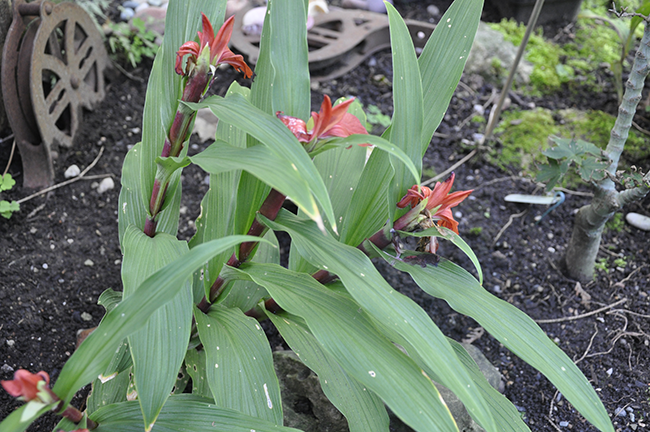
Roscoea are in the ginger family, but the are hardy, and add a great structure to late summer plantings, as is seen here in this Toronto garden.


3. Roscoea - I gotta, gotta, gotta  get as many as I can.

I first saw the genus Roscoea at Kew Gardens a few years ago. They had a collection growing in pots, which intrigued me then, but for some reason, when I returned home, photos in catalogs never seemed to do them justice. Flash forward to this past September while visiting friends in Toronto, I saw these plants in a friends garden, and I instantly added them to my no long "don't forget to order nest year" list.

Roscoea are not easy to find, these hardy relatives of the Ginger, are said to be hardy to USDA zone 5b, mostly hardy in Zone 7, so they are worth a try in my zone 6/5b garden. Finding them is the challenge, it seems most need to be imported from the UK ( like from Paul Christian Rare Plants here). Still, I am on the hunt. The foliage is somewhat tropical looking, and they flowers, which often occur in late summer or autumn look like nothing else in the plant world. Apparently, they are great for stumping plant geeks too, which is what serious plant catalog plant descriptions always say when they really want to make something irresistible.

A red flowered Roscoea in September.


In the same Toronto garden as above, I saw clematis vines growing in mixed shrub and perennial borders, trained on cedar posts and rebar posts. I think I need to do this.
4. Clematis on a stick.

I've seen clematis grown like this in the UK, and again, in this garden in Toronto. I don't know about you, but I always have a problem finding the right plant to grow clematis. I'm not one to train them to my lamp post, and I don't want them growing on the greenhouse, or tumbling over every shrub ( the way they are supposed to grow, as they grow this way in nature). But training clematis vine to a sturdy 10 foot cedar post, which they will cover within a year, and then equally engulf in blossoms the following year, will allow me to make focal points in the border, and in mixed shrub plantings, where I may not want ever shrub covered in a clematis vine. Now, to narrow down my selections!

These watercolors from the V&A museum, London, Beatrix Potter collections, show some of her early watercolor studies, and the potted fuchsias. They remind me of the ones we used to raise at the Stoddard Estate, where I used to work as a teenager as a gardener. I want to revisit this classic way of raising fuchsias, as today, most people only think of the big, flouncy flowered forms in hanging baskets that rarely do well.


5.  Potted Fuchsia's  For that Beatrix Potter English look.

It's true, I am spending more time on the Fuchsia web sites than I should, like Earthworks, where they have hundreds of fuchsias. I refuse to buy steroided, growth-hormone drenched fuchsias that I see every spring sold at my local garden centers, I will just kill those within weeks, or when I forget to water them just once, but there are wonderful fuchsias, both for the serious collector and for the average home gardener who might want something different as a potted plant for the terrace in the summer.

I prefer upright forms, and yes, those with pendant flowers are a fav, but I will add others to my order. Trained as standards, fuchsias make elegant statement points, especially if planted in a nice, clay pot which you will need, as the can become top heavy. Tied to a bamboo cane, and allowed to reach a certain height, and then pinched out, a standard trained tree fuchsia can live for years, as long as you can provide a cool, dark room, like a cellar for their winter dormancy.


Down facing lilies look like lanterns in the garden, they provide a form that balances out spiky plants, airy plants and shrubby ones. Pendant blossoms can make a garden feel fairy tale like. 


6. Lilies by the dozen, or 'en masse' - I need to do this more.

When I say 'lilies' I personally prefer all of the down-facing types, as they are my favorite for some reason, as the up facing Asiatics feel un-natural to me, and the up facing trumpets feel practically alien. Tall, six foot of more, stems of fragrant trumpet lilies are artistic expression points in a garden, and four or five foot tall stems of down-facing Asiatics, makes a garden feel as if I just stepped into an old painting from a fairy tale, with the pendant blossoms looks a bit like little lanterns dangling from whorled branches. Both are as if Mother Nature had plans to, at some time in her future, provide illumination in the evening garden, and don't get me started on fragrance.


'Ariadne' is a noce down facing Asiatic lily, that looks great when planted in mixed border plantings in large numbers.
They also get better with each passing year, as the bulbs get larger.

And when I mean 'en masse" I mean - planted not individually, but in a group, perhaps a foot apart from each other, so when they bloom, they appear as if one plant, or colony has formed from a mother plant which may have dropped her seed pod. This is the proper way true lilies should be grown ( by 'true lilies' I mean lilies that essentially arise from a scaled bulb, not dayliies, which botanically are Hemerocallis species, a completely different genus). Lilies planted en masse, in a perennial border, or in a mixed shrub foundation planting, are incredibly effective, and captivating, far more than any hydrangea could be. Costly? Well, if you consider that you might pay $30 -$60 for a dozen, it can seem so, but then again,  that's what one would pay for a good ( or half-way good) shrub.  It's easy to justify the cost when one thinks of it in that way.

Joe and I at the New England lily Society Show, now be honest, what lilies would you want in your garden….the uprights in the foreground, or the pendant ones in the rear? Maybe it's just personal taste, but I like down-facing pendant forms best, in the garden.
My rule this year is to order at least 12 of one variety, or not order it at all. As with daylilies, a visit to your local lily society show would help you make up your mind. There was this colonial home up the street from us, built in 1766, and along it's east side it had a border or trumpet lilies. I still think of it. I go weak at the knees for lilies that tower taller than I am, and trumpets are the finest for this because they have blossoms that tip downwards. Planted outside our living room window where they can listen to the Batchelor drifting out through the screens on summery nights as June bugs buzz against the window screens - now, that's livin'.


Joseph Tychonievich with some of Dan Jaffe's trillium selections at the New England Wild Flower Society's Garden in the Woods, in Framingham, MA.


 7. Create more 'botanically important' plant collections

OK, a bit odd to add this to this post, since I have common fuchsias and begonias listed too, but at the same time, I feel that I should ( must) start some serious collections, or start a more in-depth breeding/propagation program. I did begin a collection of Podophyllum last year, which I will continue to grow, inspired by my friend Darrell Probst, but this June, after a visit from Joseph Tychonievich where we took a side trip to the New England Wild Flower Society's Garden in the Woods, nearby in Framingham, MA, where we saw the breeding/propagating/selection program of botanist Dan Jaffe, I was convinced that Trillium might be the perfect genus to dabble with, as our soil and woodland is similar to Garden in the Woods.


 8. Grow more veggies that I can't buy at the store

Yes, I grow all of the regular, stand-by summer veggies, but I also need to remind myself to raise things that I cannot find at the store, even at our fanciest Whole Foods. Sorrel perhaps, to make some of David Chang's Sorrel Pesto, or pea tendrils. I will decide at the last minute, as my list is long, but there is nothing like being able to pick ones own fresh amaranth leaves in June. Crops like this make a home veg garden special, if not extra special.

MY (SORT-OF) SECRET SOURCES FOR INTERESTING PLANTS FOR CONTAINERS AND MORE

IOCHROMA FUSCHIOIDES 'ROYAL QUEEN', A SPECTACULAR TROPICAL SHRUB FOR A SUMMER CONTAINER IS ONE EXAMPLE OF WHAT YOU CAN ORDER ONLINE NOW, FOR POTTING UP IN MAY.


It's nearly April and we barely have anything in the garden that seems alive, there is still 1 - 2 feet of snow on the ground - I mean, even the witch hazel has yet to to bloom. Not a snowdrop to be seen, no crocus, not even an early blossom on the Cornus mas. To top this all off - it's been snowing for 8 hours now, but at least nothing is sticking. I might even go as far as to say that it looks pretty - maybe pretty, if this was November.

BEGONIAS OF ALL TYPE GROW QUICKLY AND CAN MAKE IMPRESSIVE SUMMER CONTAINERS. THESE CANE-TYPE OR ANGELWING BEGONIAS FROM LOGEE'S GREENHOUSES OR KARTUZ GREENHOUSES ARE BEST IF PLANTED 3 TO A LARGE POT - STAKE THEM AS THEY TOWER UP TO 4-5 FEET IN ONE SUMMER.

I think I am kind of ready for spring.  So why not spend some time ordering plants for summer containers, for the summer greenhouse and for the garden. Local garden centers seem to carry more and more big-brand selections, like Proven Winners and Monrovia Nurseries, which is great, since these are  fully tested varieties, often selected for their vigor and overall performance, but if one wants something different or more unique, it will take a little more effort.

Here are some of my go-to sources on-line for interesting container plants which often cannot be found locally, as well as some sources for rare bulbs, herbs, shrubs and trees and tender plants which one might bring into a cellar, greenhouse or a cold cellar for the winter if you live where it gets cold and snowy.


TENDER TOPICALS HAVE BECOME COMMON IN MOST NORTHERN GARDENS, WHERE BANANAS, ALOCASIA AND COLOCASIA ARE AS OMNIPRESENT AS GERANIUMS. BUT WHY NOT RAISE THE BAR A BIT? THIS MOTIF IN BLACK AND DARK WAS FROM A PLANTING I CURATED A COUPLE OF YEARS AGO. I MAY TRY IT AGAIN THIS YEAR.


Goodwin Creek Gardens, Williams, Oregon

You all probably recognize the name Goodwin Creek, as it is a variety name for a fine Lavender (yes, it was named after them), but if you are interested in lavender plants (they had 68 named varieties as of today - really), then this is the place to go. I wish that I could grow lavender well, but in our climate, I just don't bother ( I do have a few large plants that survive on the south side of our house, but we are too humid).

GOODWIN CREEK NURSERY HAS 21 DIFFERENT VARIETIES  OF ROSEMARY, RANGING FROM CULINARY FORMS, TO UPRIGHT'S, CREEPERS, PINK, WHITE, BLUE AND VIOLET FLOWERED FORMS.
YOUR LOCAL HOME STORE? IT ONLY HAS ONE VARIETY.
What I order from Goodwin Creek are other herbs such as woody thyme varieties rich in oils  for cooking, or culinary varieties of herbs like oregano and thyme, which are usually impossible to find at local nurseries - there are particular varieties which are excellent in the kitchen, so if you want the perfect Greek oregano, this is the place to go. Then,  there are the rosemary selections, pink, white flowered, high-oil content forms, culinary forms, weeping, those best for tall topiaries  - they have 21 varieties. GO crazy.


MANY OF THESE NURSERIES CARRY DIFFERENT SELECTIONS OF CLASSIC CONTAINER PLANTS IN THE EAST, LIKE AGAPANTHUS . ONE NEVER GETS TIRED OF THESE, EITHER IN THE CALIFORNIAN LANDSCAPE, OR IN A LARGE TUB IN THE NORTH, WHERE THEY CAN BE BROUGHT INTO A COLD ROOM FOR THE WINTER.

A COLLECTION OF STANDARD FUCHIA'S LIKE MINE FROM LAST YEAR MIGHT BE A FUN PROJECT


FOR A COLLECTION, DISPLAY OR A DARING PROJECT 

Remember those fuchsia's I raised this past summer? Fuchsias  from Earthworks Fuchsias. You may remember mine from last year. So many fuchsias sold as rooted cuttings in pots that are already bushy and ready to pot up, that you could spend a week editing and placing you order. I suggest the upright varieties for standard topiary plants.

Exhibition Chrysanthemums are very difficult to find in North America, but for those of us who are addicted to their beauty, we can rejoice in that King's Mums is back again. Chrysanthemums from Kings Mums - Now under new management by a young couple who are not only chrysanthemum experts, but they took care of the collection at  Longwood. King's is just about the only source in the US for exhibition mums (if you know of another, let me know). All raised by cuttings, and shipped every two weeks. You gotta try them - get all the info you need from the National Chrysanthemum Society or from old  books found on auction sites. Be a part of the trend to bring back this lost art of trained chrysanthemums.

Geraniums are not boring at all. Truly they are Pelargoniums, and they include the scented ones, unique species and selections that go back to the 1700's. The finest source in the US is  Geraniaceae.com
I warn you though - Geraniums and Pelargoniums are addicting,. Geraniaceae specialize in hybrid types, and heirloom ornamentals. These are the sort often seen only in collections in England or in botanic gardens but there is no reason why you can't raise them in this way, too.


ONE OF MY FAVORITE THINGS ABOUT GARDENING IS CURATING REALLY UNIQUE COMBINATIONS OF PLANTS IN CONTAINERS. THROUGHOUT THE SUMMER, I MOVE THEM AROUND, GROUPING TOGETHER INTERESTING COLORS AND TEXTURES.

SOURCES FOR TENDER AND TROPICAL PLANTS TO USE FOR SUMMER CONTAINERS


Joy Creek Nursery - interesting perennials, hardy and tender shrubs that can be used in containers too. Far too many different types of plants to list here. Go explore ( and spend).


SALVIA AZUREA WAS SO BEAUTIFUL IN THE GARDEN OF ROBIN MAGOWAN AND JULIET MATTILA IN SANTE FE, NEW MEXICO. WILL I DARE TO TRY IT IN MY NEW ENGLAND GARDEN? YOU BET. IT'S PERIWINKLE /MORNING GLORY BLUE COLOR WAS  BREATHTAKING. I HAVE TO TRY IT.


Digging Dog Nursery - for rare shrubs, container plants, greenhouse plants in the North, and summer container plants of which, I am trying many Kniphopia selections and species, since we are just out of zone for many. Digging Dog has a superb selection of many found no where else. They also have the most beautiful plant I saw last year - Salvia azurea, I saw it growing in a garden in Sante Fe. It's Morning Glory blue blossoms forming a cloud of azure - and buzzing in honey bees . Still, I am going to try this sky blue beauty in a pot or in the rock garden.


Far Reaches Farm - Dare I admit that this is my favorite source of all, right now? Not only great, unusual plants for containers ( at least for us here in the east), but this nursery comes closes to the old Heronswood, in that they often carry plants found really at nurseries where there are explorer's.  Woodland plants, woodies, perennials, ferns, shrubs, alpines, bulbs, truly for the collector. Like the others sources here, the selection is random but all are incredibly interesting.  They carry my beloved Cardamine, which spread so beautifully in our woodland garden. Crocossmia? They have 45 types.


THERE ARE DOZENS OF VARIETIES OF ABULTILON OR FLOWERING MAPLE, BUT COMMERCIALLY ONLY A HANDFUL ARE GROWN. KARTUZ GREENHOUSES AND LOGEES, AS WELL AS DIGGINGDOG AND ANNIES ANNUALS CAN GET YOU HOOKED ON VARIETIES THAT NO ONE ELSE WILL BE OFFERING.

Kartuz Greenhouses - This is my go-to choice for tender greenhouse plants  (like Logee's) but even more odd and interesting things - loads of gesneriads, unusual tropical shrubs worthy of a container and many begonias for that special collection that will look like Martha's. I am ordering a Bakeridesia integerrima for a pot, Begonia 'Earth tones' , this abutilon that has coloring like fire, they have Asclepias  physocarpus - the 'Hairy Balls' plant which is always worth it for a LOL garden moment, and Clerodendron bungei of which 3 planted in a 40" tub will out shine any container by late August, I promise. It's what many botanic gardens plant to place near their front entrances. Plant them in June, pinch them and fertilize well.  And Boom. You're welcome.

Cistus Nursery - It's hard to explain all that Cistus Nursery carries, but aside from Cistus which we just cannot grow here in the North East, there are many plants to lust for. I find treasures here that do well in the cool greenhouse,  like Australian shrubs and trees, or perennials that will be hardy in my garden if sited well. A fine source for Agave's that no one else has shrubby Coprosma, Impatiens omeiana varieties, Libertia for striking containers, Opuntia varieties that defy description,  and lots of interesting succulents.


Logee's Greenhouses - What can I say? So many delights at Logee's. A little bit of everything, and they are my neighbors. This Connecticut greenhouse is ancient, and most of my plants seems to hail from here.
A DAVIDIA INVOLUCRATA, OR FABELLED GHOST TREE  - A ZONE 7 TREE FROM GOSSLER FARMS WHICH  I PLANTED OUT IN OUR ZONE 5 GARDEN 20 YEARS AGO. IT BLOOMS AFTER MILD WINTERS.

Gossler Farms - A classic nursery known by many serious plant collectors. Magnolia's are king here but so are rare shrubs, and perennials. Always, the finest selections for unusual plant collectors. It's an obvious choice if you live in the Pacific NW, but as many of these nurseries are there, don't feel that these plants won't live elsewhere. You may need to give them some protection, you may even need to just let them freeze and replace them in the spring, as we are getting used to adding tender sub-tropicals like Brugmansia and alocasia to our gardens now. Here in the Boston area, I have many plants from Gossler Farms planted outdoors, including a 20 year old blooming Davidia invollucrata tree and some magnolia's, of which they are renown for. My Phormium, or New Zealand flax come from here.

THIS LOVELY HARDY SINNINGIA TUBIFLORA IS FROM PLANT DELIGHTS NURSERY - THEY HAVE MANY, AND IT GROWS AND MULTIPLIES LIKE CRAZY - FROM POTATO-LIKE TUBERS. WINTER IT OVER IN THE CELLAR OR COLD, FROST FREE GARAGE, AND YOU WILL SOON HAVE MANY TO SHARE.

For potted olive trees, with many interesting varieties which are often difficult to find, try Santa Cruz Olive Nurseries. I have never ordered, but I keep this source bookmarked for some reason.


Plant Delights Nursery - Naturally, what can I say? Awesome. Plus, they have Brugmansia 'Snowbank' this year - just about the most magnificent Brugmansia available, I think. On my Facebook page you can see a leaf of one I had 8 years ago in the masthead. It's a must-get, if it isn't sold out. It is a variety which is hard to find, but the variegation is so showy, that everyone will ask you where you got it.

OH, IF ONLY THIS LOOKED THIS SUMMERY TODAY! I AM THINKING OF ADDING MANY WHITE HYDRANGEAS TO THE GARDEN THIS YEAR - A LITTLE CLICHE, I KNOW, BUT I WANT EASE OF CARE. WHAT DO YOU THINK? HEDGES OF WHITE HYDRANGEAS AND BOXWOOD CLIPPED IN ROWS? DOES IT WORK?


ALPINE TROUGHS AND HIGH ELEVATION PLANTS RAISED IN ROCK GARDENS AND ROCK WALLS ARE MAKING A COMEBACK, ONCE SO POPULAR IN THE VICTORIAN ERA, TODAY, THESE ENDANGERED AND THREATENED RARE ALPINES THRIVE IN PRIVATE COLLECTIONS OF PEOPLE WHO CARE.


ALPINE AND ROCK GARDEN PLANTS

I am addicted to many plants, but I have a soft spot for alpine and high elevation plants. Many of you know that I am currently president of the North American Rock Garden Society, which I will be talking about soon in a future post, but I wanted to share with you some sources for these incredibly interesting and often - drought tolerant alpines . Alpines is a broad term today, often encompassing most any plant that will stay small, sometimes so small, that they are grown in hypertufa troughs. True alpines are plants from the mountaintops of the world - high elevation plants that grow above the tree-line ( you know, on the black diamond ski trails and above). One can get very geeky about such plants, raising them from seed, planting them limestone tufa rock, but one can also raise alpines which are practically care free - sempervivums and hens and chicks are true alpine succulents - I saw them growing high in the alps along with rare saxifrages. I'll write more about rock gardens and alpines soon, but until then, if you are bored with what you are growing, why not raise the bar?


Wrightman Alpines - Harvey is a good friend, but this is a fine mail-order grower in Canada who ships to the US.

Arrowhead Alpines - One of the last remaining nurseries who sell Primula allionii and other precious plants. A wide selection.

Siskiyou Nursery - Well known in the North West, and a gold standard alpine and interesting plant nursery.  Every alpine gardener shops here.

Sequim Rare Plants - I just discovered this gem, thanks to a reader. They carry many of those Primula auricula which I wrote about recently a few posts back.


A POT OF PERUVIANDAFFODILS OR HYMENOCALLIS CAN BE FOUND IN EITHER RARE OR COMMON FORMS, EVEN GARDEN CENTERS WILL HAVE BAGS OF DUTCH RAISED BULBS. THEY ARE FRAGRANT! NATIVE TO SUBTROPICAL AMERICA, THEY ARE EASY.

UNUSUAL OR EVEN RARE BULBS FOR CONTAINERS 

There are so many bulbs that you can raise in pots, and it's something we often don't think about when picking up some 6 packs or geraniums at the garden center, but plants such as lilies and gladiolus (especially the smaller species and relatives) are perhaps even better when raised in pots than in the garden. I'll share with you that after reading Sarah Raven's book about Vita Sackville-West's Sissinghurst this past autumn. I marked it up with lots of post-its  about what bulbs I could raise in pots, something she really promoted. Like her, I'll be adding pots of Tigridia, Sparaxis, Gladiolus species and Ixia to my summer container collections. But don't forget lilies - go right now to your garden center and buy a few just for pots - they are terrific grown this way. Just be sure to plant them into the garden once autumn arrives, as they won't survive in pots through the winter.

THIS RED SCDOXUS MULTIFLORUS IS EASY BOTH AS A HOUSEPLANT, AND AS A SUMMER POTTED PLANT. MINE SPEND THE WINTER DORMANT, COOL AND DAMP UNDER A BENCH IN THE GREENHOUSE, BUT THEY ALWAYS EMERGE IN THE SPRING. A CELLAR OR COLD GARAGE WOULD DO AS WELL.

Old House Heirloom Bulbs - I really need to thank these guys for sending me a very nice gift this past fall - I have friends who swear by this Vermont nursery, which is well known amongst the collector crowd. Their catalog and site is so tempting, and a bit like reading a catalog from the 19th century.

I WAS FIRST INTRODUCED TO THE GENUS ROSCOEA IN THIS TORONTO GARDEN OWNED BY MY
 FRIENDS BARBARA AND BELLA.

Paul Christian Rare Plants - UK Here is what I ordered ( for the greenhouse really, but if you have one, these are ridiculously rare - as in - botanic-garden-rare.  My order included Canorina, which is more of a winter houseplant, but I saw it on my winter trip to the UCONN greenhouses, had to order it now, I also suggest Dipcadi serotinum, which essentially is a brown hyacinth relative that can bloom at anytime, last year, mine bloomed in a clay pot set out for the summer - just interesting, insanely rare and odd, I ordered some Ranzania japonica, because a Ranzania was featured on the cover of the North American Rock Garden Society quarterly this past winter, and many species and selections of Roscoea, these relatives of the ginger family that I saw growing a couple of years ago in a Toronto garden some friends, and once I spotted them in the alpine house at Kew, but just try to find any bulbs anywhere. I finally was able to find some here this year.

Ruksans Bulb Nursery, Latvia - OK, super plant geek site, but Janus has the best of many things like Corydalis solida and garden bulbs for autumn. Just listing it here to remind you collectors that you often need to order early for late summer delivery. I always forget!

CALADIUMS CAN BRIGHTEN UP SHADE GARDENS, BUT START THEM INDOORS WHERE IT IS WARM, THEY ARE VERY SENSITIVE TO COOL SOIL, EVEN MY GREENHOUSE IN JUNE WAS TOO COOL.

Caladium bulbs4less   This site may seem out of character for me, and I know, it sounds like one of those sites that would have pop-up porn, but the bulbs I ordered were nearly 7 inches in diameter, and the quality was incredible. You need to buy in volume, but I highly recommend them.


SNOW CONTINUES, TODAY HERE IN SOUTHERN NEW ENGLAND. I CAN'T REMEMBER ANY YEAR ASIDE FROM 1996 WHEN SPRING CAME THIS LATE.